
Explore & Engage

TIMELINE

Pre 9/11 Incident
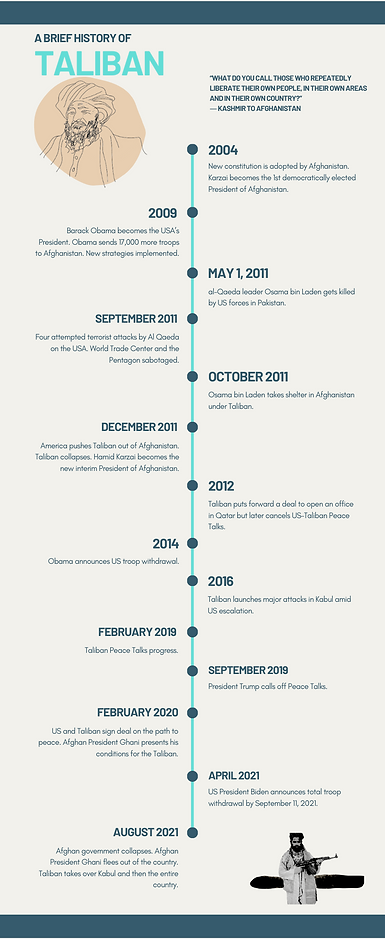
Post 9/11 Incident
Key Terms
-
Abdication: An act of abdicating or renouncing the throne.
-
Al-Qaeda: A multi-national Sunni Islamist terrorist organisation founded in 1988 by Osama Bin Laden and others.
-
Bin Laden(s): The Bin Laden family is a wealthy one, intimately connected with the innermost circles of the Saudi royal family. It is the namesake and controlling shareholder of Saudi Binladin Group, a multinational construction firm. The most famous member of the family, Osama Bin Laden, was a founder of the Islamic militant organization Al Qaeda.
-
Durrani: The Durrani are one of the largest Pashtun tribes in Afghanistan.
-
Emirate/Amarat: Refers to a lordship; the rank, the lands of an emir.
-
Guerilla warfare: Irregular, unauthorised warfare using military tactics like ambushes, sabotages, petty warfare, etc.
-
Hamid Karzai: First elected as interim president in the 2002 loya jirga, he became the first democratically elected president of Afghanistan in 2004, serving 2 consecutive 5 year terms.
-
Insurgent, Insurgency:
-
A person fighting against civil authorites or an established government, a rebel.
-
An active revolt or uprising.
-
-
ISIS: Islamic State of Iraq and Syria, also known as Islamic State of Iraq and the Levant (ISIL) is a Sunni Jihadist group that was inspired by Al-Qaeda.
-
Jihad: Used in religious context by Muslims to refer to someone who engages in any kind of struggle for the sake of Islam (translation: “Holy War”).
-
Khanate/Khaganate: A political entity ruled by a khan, khagan, khatun, or khanum; equivalent in status to tribal chiefdom, principality, kingdom or empire.
-
Loya Jirga: A special type of Jirga (legal assembly) in Pashtunwali (the traditional code of laws of the Pashtuns). Mainly organized for choosing a new head of state in case of sudden death, adopting a new constitution, or to settle national or regional issue such as war. (translation: “Great Assembly”)
-
Madrassa: A Muslim school, college, or university that is often part of a mosque.
-
Mujahideen: Broadly refers to Islamic guerrillas who engage in jihad, interpreted by most Muslims as the fight on behalf of God, religion or the community.
-
Pashto tribe/Pashtuns, Pashto:
-
Pashtuns, historically known as Afghans, are the largest Iranian ethnic group native to Central and South Asia.
-
The Pashtuns’ native language is Pashto, an Eastern Iranian language.
-
-
Protectorate: A state that is controlled and protected by another.
-
Sharia: In Islam, it is referred to as God's immutable divine law based on the teachings of the Quran (translation: “the path leading to the watering place”).
-
Taliban: An Islamist religious and political movement and military organization in Afghanistan which imposes its own version of the Sharia law which includes Pashtun tribe values (translation: “the seekers” or “the students”).
-
USSR/ Soviet Union: The Soviet Union or Union of Soviet Socialist Republics (USSR), was a socialist state that spanned Europe and Asia during its existence from 1922 to 1991.
Post 9/11 Incident
Afghanistan before Taliban
As people who have never visited Afghanistan or read its history, it is difficult for us to visualize it in a light other than that of a regressive and oppressed country. Most of us are aware about the current political and human rights issue in Afghanistan, but we rarely stop and think about the history of Afghanistan in terms of development. Albeit it’s the past, but it is still important.
There was a time when Afghanistan had peace, it was beautifully diverse and culturally rich before all the bloodshed and wars. The photos we see from Afghanistan in the 1960s are almost unrecognizable, a stark contrast from the photos of Afghanistan now, which are utterly heart-breaking. It is hard to believe, but once there was a time when the streets of Kabul were buzzing with tourists shopping and sightseeing in dresses or modern clothes with the locals. Girls coming home from school with friends, and busy chatter of people coming back from work, men and women alike.

Jan Podlich during a shopping trip in Istalif.
Uncovering the fallen grandeur
Art can be a great reflection of people’s freedom as it is highly personal and free of boundaries; atleast, as long as the artist is. Fashion is a major part of art, and as we already know, Taliban banned most forms of art and cultural expressions, so the restriction on fashion is no surprise. Afghanistan had a very distinct cultural identity before the wars, and people were living in peace. In the 70s, women in urban areas were working in different sectors, and some were attending universities. The burka was also made optional. All was not perfect, considering the rural women who were still forced to be in purdah, but it was a start. A start that we hope can be made possible again.

Young women in Kabul, 1970s
Art changes with circumstances, and under the Taliban’s rule, it is sure to be crushed. However, it has never been about physical matter, it is about an idea. In art, an idea is enough to spark revolution.
Buried in the silence of music
Afghanistan had a rich heritage in music influenced by Persian melodies and Indian compositional principles before the Taliban outright banned it in late 1990s. The country was rich in variety when it came to music, from Sufi and Classical to Pop and Hip hop. Music was extremely popular, and was a must-have in weddings and parties, just like in any other country. It is important to revive the cultural history, the glory days of Afghanistan in order to understand the country itself and not just brush it off as a war-torn, barren land.

Musicians in Herat, 1973
Many musicians have escaped Afghanistan since the Taliban took over again. Even though the Taliban has not made any official statements regarding the ban on music right now, many local commanders have started its destruction. The ban has been reported from southern Zabul and Kandahar provinces, and musicians from all over Afghanistan are waiting apprehensively to face their destiny.
Taliban & its History
To understand the origins of the Taliban, one must first know about the Afghan Mujahideen. The term mujahideen is used to describe Muslims who engage in a struggle of any nature for the sake of Islam, which is otherwise known as jihad or “Holy War”.
The Afghan Mujahideen consisted of various Islamist rebel groups who were vehemently against both the Soviet Union and the Democratic Republic of Afghanistan, fighting them during the Soviet-Afghan War (1979-1989) as well as the First Afghan Civil War (1989-1992) that would follow. These dispersed Islamist groups were heavily funded by Western governments (in particular, the United States), China, and the UAE. These “Mountain Men”, as the Soviet troops referred to the Mujahideen, fought a long guerrilla war against the Soviet military, as a result of which the Soviets suffered heavy losses and had to withdraw from the country in 1989. Shortly thereafter, the Mujahideen rebelled against the communist government of Muhammed Najibullah, and succeeded in forcing him from office in 1992.
The Taliban was another austere movement in 1994 (five years after the end of the Soviet-Afghan War), formed in response to the corrupt practices of the disunited Muhajeddin militia leaders and warlords who were flourishing by exploiting the general public under Rabbani’s government. Nearly all of the Taliban's original leaders fought in the Soviet-Afghan War, for either of the sections Hezb-i Islami Khalis or the Harakat-i Inqilab-e Islami of the Mujahideen. Like its predecessor, the Taliban was covertly backed by foreign forces as well- namely, the CIA (United States) and ISI (Pakistan), with support from the UAE too. The organisation emerged from Northern Pakistan as a group of Pashtun tribal “students” studying in the Pakistani madrassas (the word “Taliban” literally meaning “students” in the Pashto language). In 1995, the Taliban captured the Herat Province which borders Iran, and exactly one year later, they conquered Kabul, the capital, overthrowing the presidentship of Burhanuddin Rabbani (who was one of the founding members of the Afghan Mujahideen that resisted Soviet control). Before their totalitarian rule in 2001, the Taliban had gained control over 90% of the country.
The Taliban, under the leadership of Mullah Mohammad Omar, enjoyed initial popularity since it drove out the Soviet, and broke down on corruption. Under Taliban control, unfair road taxes, as well as extortions on most areas of life declined, and roads were made safe for commerce to flourish. “The time of the men with guns” (Zaeef 59) as the Afghans called it, was coming to an end. However, the organisation soon began to reveal its agenda of imposing a strict version of the Sharia law (which was also influenced by the Pashtun’s pre-Islamic tribal code). Women were told to cover themselves from head-to-toe in burqas or chadris, being always accompanied by a male member of the family when moving outside; barber's shops were forcefully shut down, with men being jailed for having their beards trimmed too short; musicians were hunted down and T.V. was banned.
As Ahmed Rashid stated in his book Islam, Oil, and the New Great Game in Central Asia,
"Out of this conflict [Soviet-Afghan War], which was to claim 1.5 million Afghan lives and only end when Soviet troops withdrew from Afghanistan in 1989, would emerge a second generation of Mujaheddin who called themselves Taliban (or the students of Islam.)"
Taliban and a brief history of Afghanistan’s conflicts.
Afghanistan has a long history of conflicts and civil wars, and the Taliban is a product of such a conflict. To understand the workings of the Taliban, we need to delve into the chaotic history of Afghanistan. By the mid-1970s, Afghanistan had been modernizing for decades in fashion, architecture, and women's rights. The country slowly descended into bloody coups and civil wars after the Saur Revolution. On April 27, 1978, insurgent troops led by the People's Democratic Party of Afghanistan (PDPA) stormed Kabul Palace and overthrew the Government of Mohammed Daoud Khan in a violent coup called the Saur Revolution. After Daoud Khan's execution, a civil war erupted in the country due to the internal fight in PDPA regarding the leadership position. The conservative Islamic leaders began a revolt against social changes introduced by Khan at the same time. Mujahideen, a guerrilla movement, was created to fight the government supported by the Soviets. Mujahideen is a plural Arabic term that refers to Islamist guerrillas who engage in Jihad, interpreted by some Muslims as fighting on behalf of God.
After the Soviet Invasion of December 1979, in which the Soviet Union invaded Afghanistan with the excuse of upholding their friendship with the country, led to the infamous Soviet-Afghan War which went on for nine years. The Mujahideen were getting their resources from United States, China, and Britain via Pakistan in their fight against the Soviets. Millions of people lost their homes and lives in this war and, it went down as one of the most brutal wars in history as 6.5% to 11.5% of Afghanistan's population was perished. The war ended in a peace treaty and the Soviets withdrawing their troops.
After three years, the new Government collapsed, and a war ensued among the Mujahideen commanders. In this mayhem, a former commander of Mujahideen, Mullah Mohammad Omar, created a new militia - Taliban with the Afghan refugees supported by Pakistan and ISI (1994). The Taliban rose to power rapidly, and Afghans who were exhausted by the famines and war accepted the rule as the Taliban promised peace, which gradually descended into something sinister. Taliban captured Kabul in 1996 and established an Islamic Emirate where they claimed to 'temporarily suspend' education for women but, it was that clear they had no intention of opening schools for women because the suspension went on for the entire rule. Under the rule of the Taliban, women were not allowed to go outside without burka and a male escort. They were no longer allowed to work. All other religions were not allowed to preach and, the punishment for revolting against them was death. The rule of the Taliban was regressive and violent and, the people of Afghanistan are suffering to this day. They were never really free- not under the Taliban and not under the U.S.
Al-Qaeda & its History with the Taliban
Al-Qaeda, which is now recognized as a multi-national terrorist organisation, was created in response to support the Muslims (Mujaheddins) fighting in the Soviet-Afghan war. Islamic extremists and Safalist jihadis started this coordination network, recruiting members throughout the Middle East. The term Al-Qaeda literally translates to “The Base” or “The Foundation”.
Osama Bin Laden (a founder of the organisation), in his October 2001 interview with Tayseer Allouni, described the origins of the name in the following manner:
“Brother Abu Ubaida created a military base to train the young men to fight against the vicious, arrogant, brutal, terrorizing Soviet empire…So this place was called 'The Base', as in a training base, so this name grew and became.”
The Soviet-Afghan war ended in 1989, leading to the dispersal of the organisation to various parts of the world, but it continued to oppose foreign influences (namely, the USA) and corrupt rulers in Islamic lands. It ultimately made its headquarters in Afghanistan (1996), receiving backing from the Taliban.
On the fateful day of 11th September, 2001, four synchronised terrorist attacks were carried out by the Al-Qaeda under the leadership of Osama Bin Laden. The USA’s president at that time, George Bush, in response to this incident, stated that Al-Qaeda was responsible for the tragedy that unfolded, and that the Taliban regime in Afghanistan was providing refuge to the militant organisation. The Bush cabinet and mainstream news sources then went on to fuse these two groups- the Taliban and the Al-Qaeda-making them the same entities in the eyes of the Americans. However, it is argued till date by many scholars that the Taliban played no role in the 9/11 tragedy, having no prior intel about the attacks. In fact, the Taliban openly condemned the attacks, but strongly rejected proposals that Osama Bin Laden, who was given a safe haven in Afghanistan at that time, could be behind these attacks.
Hence, although the Taliban and Al-Qaeda have collaborated multiple times over the course of many years, they are different organisations with different agendas: Al-Qaeda’s objectives being more multinational, while the Taliban’s are more centred on Afghanistan.
Taliban and a brief history of Afghanistan’s conflicts.
For 20 years, USA has been at the tip of terror. Finally, thousands of US militants have come home but the struggle wasn’t easy.
REASONING USA’S WITHDRAWAL FROM AFGHANISTAN
Biden in his speech concerning USA’s withdrawal from Afghanistan mentions only a few of the main reasons behind the withdrawal. And many people differ from his statements. So, why exactly did the US withdraw its troops from Afghanistan?
-
The 9/11 attack posed a strong emotional reason to destroy al-Qaeda and take over Afghanistan to prevent anymore attacks. But after 20 years of war, the position of US forces in Afghanistan had no meaning and so Biden did not want this “War Against Terror” to continue further.
-
Learning from Vietnam, the US decided against standing on Afghan land any longer as TAliban 2.0 came stronger from its previous form. Taliban 1.0, on one hand, survived on donations and support from Pakistan’s ISI, while, Taliban 2.0 had its own economic system and strengthened itself from the roots. Hence, it went for a total withdrawal.
-
Maintaining a military force in a foreign land for 20 years, starting burdening USA’s resources. In recent years, the expenditure amounted to about $45-$50 billion.
2020 US Presidential elections make Biden the new President of US, who had his priorities clear that the war must be put to end. He believed in individual nation building and that the US can't help Afghanistan any more.
US PEACE TALKS WITH TALIBAN
February 2019 -
US special envoy Zalmay Khalilzad and top Taliban official Mullah Abdul Ghani Baradar, February 2019, held the first peace talk and negotiated on the United States withdrawing its troops from the country in exchange for the Taliban taking a pledge to block international terrorist groups from operating on Afghan soil.
September 2019 -
In a sudden move, US President Donald Trump posted a tweet calling off peace talks and cancelled a secret meeting with the Taliban and Afghan President Ghani after a US soldier was killed in an attack by the Taliban. The Taliban, however, wanted to continue negotiations but warned that the cancellation could result in an increase in the number of deaths.
February 2020 -
The final US-Taliban peace treaty came into existence, in which the Taliban vowed that the country will not be used for terror activities. The Afghan President, however, was on a different page and asked the Taliban to meet his government’s own conditions before it enters talks. Within days after signing the deal, the Taliban attacked dozens of Afghan security forces. US forces retaliated with an airstrike, which once again turned the situation grim.
US PRESIDENTS
President George W. Bush
On September 11, 2001, four commercial airliners were hijacked by al-Qaeda operatives and crashed down into the World Trade Centre in New York and the Pentagon in Washington, DC. Close to three thousand people die in the attacks. President George W. Bush vows to “win the war against terrorism.” President George W. Bush signed into law a joint resolution authorizing the use of force against those responsible for attacking the United States on 9/11. The U.S. military, with British support, begins a bombing campaign against Taliban forces, officially launching Operation Enduring Freedom. Canada, Australia, Germany, and France pledge future support. By December 9, 2001, Taliban regime in Afghanistan ended as many Taliban leaders surrendered while others went into hiding.
The U.S. Congress appropriated over $38 billion in humanitarian and reconstruction assistance to Afghanistan from 2001 to 2009. The U.S. military creates a civil affairs framework to coordinate redevelopment with UN and nongovernmental organizations and to expand the authority of the Kabul government, which receives heavy criticism. A small period of stability was established in 2003. Afghan president Hamid Karzai and U.S. president George W. Bush issue a joint declaration that pronounces their respective countries strategic partners.
President Barack Obama
President Obama decides to send 17 thousand more troops to the war zone. As of January 2009 the Pentagon has thirty-seven thousand troops in Afghanistan, roughly divided between U.S. and NATO commands.Obama gets heavily criticised for this move. A new strategy “to disrupt, dismantle, and defeat al Qaeda and its safe havens in Pakistan, and to prevent their return to Pakistan or Afghanistan” is put forward by Obama. On may 1, 2011, al-Qaeda leader Osama bin Laden gets killed by US forces in Pakistan as an answer to 9/11 attacks in New York and Washington. Obama faces pressure from lawmakers, particularly democrats, to sizably reduce U.S. forces in Afghanistan. In 2014, Obama started the US troop withdrawal from Afghanistan.
President Donald Trump
In an address to troops in Arlington, VA, President Trump differentiates his policy against Afghanistan, from that of Obama, saying ‘decisions about withdrawal will be based on “conditions on the ground,” rather than arbitrary timelines. Khalilzad says the United States will insist that the Taliban agree to participate in an intra-Afghan dialogue on the country’s political structure, as well as a cease-fire. It is unclear whether Trump will condition the troop withdrawal on those terms. Trump breaks off the peace talks with Taliban in a tweet after a U.S. soldier gets killed in a Taliban attack. Final set of negotiations take place and US envoy Khalilzad and Taliban’s Baradar sign the agreement stating USA’s total troop withdrawal. President Ghani’s conditions come through but are not registered.
President Joe Biden
Fulfilling President Trump’s campaign promise comes into action by the last recoveries of US troops from the land of Afghanistan. By September 11, 2021 US establishes to withdraw all its forces and on August 15, 2021 Afghan government collapses and Taliban finally takes over Kabul.
President Biden gives the final statement on this issue, calling off USA’s military inclusion in Afghanistan and adding in the reasons.
Who Fills Taliban’s Pockets?
Taliban as a militant group is known for its over-the-bridge missions and workforce. And although during its rule from 1996-2001 it monetarily supplemented itself with the country’s wealth, we wonder what keeps its pockets deep throughout?
United Nations in 2011 estimated the group’s annual income around $400m, and by the end of 2018, it increased to $1.5 bn a year. With such an immense capital lookout, let’s dive in and understand some focal sources of the Taliban’s capital.
-
Foreign Donations -
The neighbouring countries of Afghanistan such as Pakistan, Iran and Russia have been offering donations to the Taliban for decades. Although they play on a national level with a side capital quota fixed for the Taliban military organization, other countries like Saudi Arabia, UAE, and Qatar show their contribution through individual donations. These countries are also marked as the largest private contributors to the Taliban.
According to a classified US intelligence report, the Taliban received $106m from foreign resources in 2008, and presently this genre estimates a total of $5m of the Taliban’s wealth.
-
Drug Trade -
Although the Taliban has been denying the accusations of the drug trade by the group, many officials and think tanks reason Taliban’s absolute capital as a result of the drug trade. Drug trade accounts for up to 60% of the Taliban’s annual revenue, which comes by $100m to $400m.
Afghanistan has been noted as the biggest producer of opium for a long time. Opium is used to make heroin. In Afghanistan, it has an estimated annual export value of $1.5 - $3bn.
But mere heroin trade does not add gold bars, cultivation tax from opium farmers, taxes collected from laboratories that convert opium to heroin, and traders who smuggle the drugs, also become a major factor in the Taliban’s finance cycle.
-
Tax Extortion -
Taxes are a country’s main revenue source but in Afghanistan, the case is a little different. Here, after ousting the Afghan government, the Taliban now controls all the major trade routes in the country and border crossings - In an open letter in 2018, the Taliban warned Afghan traders to pay their taxes on various goods - creating more potential sources of revenue from imports and exports. They also tax development and infrastructure projects, truckers supplying international forces stationed in Afghanistan, and fuel and construction material.
Before 2021, the Taliban were earning more than $2m a year by billing electricity consumers in the country, according to the head of Afghanistan's Electricity Company.
Income generated from conflict is also a major capital source. Every military or urban area capture by the Taliban resulted in the looting of treasuries and weapons.
-
Mines and Minerals -
Minerals are expected to be Aghanistan’s new Taliban government’s main source of national income. Over the years, the Taliban has been illegally extracting small-scale mines and minerals in the country. The mining industry in Afghanistan is presently worth an estimated $1bn annually.
Taliban received more than $10m a year from 25-30 illegal mining operations in southern Helmand province in the last few days.
‘HUMAN RIGHTS’
THE WORD THAT DOESN’T EXIST IN AFGHAN DICTIONARIES
Let’s talk about Human Rights.
The world’s leading peace and human rights organizations have been in an uproar since Taliban’s first rule on Afghanistan. And now, the concern is even more because the group does not believe in human rights. It doesn’t exist in their dictionaries. And the effects of this ignorance, rather devilish supremacy can be seen on issues like impunity, health, refugee rights, women’s rights, children’s rights, government representation, and protests.
Weakened Health -
With the onset of the worldwide COVID-19 pandemic, Afghanistan’s weak health care infrastructure was less than competent. A total of 52,011 cases and 2,237 deaths were recorded majorly, while the real numbers are still unknown. Mere COVID-19 tests, medicines for recovery, immediate surgical needs were all nowhere to be seen. With US withdrawal and Taliban’s return, the situation worsened. During quarantine, there were many reported cases of poor households having not been included in lists for the distribution of bread because they were not members of the community mosque, while those who were relatively better off received bread. Presently, the situation is unknown with no official statement made by the new government regarding health policies.
Refugees and internally displaced people -
Against the principle of non-refoulment, Iran, Pakistan, Turkey and EU countries continued to forcibly return migrants and asylum-seekers to Afghanistan in the last decade. Forced returns, attacks on Afghan migrants, torture and drowning, arson of refugee camps, and capture of refugees as slaves were the main actions against countries like Iran who refused to accept Afghan migrants.
Children’s Rights -
In present Afghanistan, child education and youth job opportunities are being replaced by domestic violence, forced labour, and begging on the streets. According to UNICEF, over 2 million girls remained out of school, and according to government figures about 7,000 schools in the country had no building. Large numbers of children continued to be pressed into forced labour or begging on the streets. ‘Bacha bazi’ is the act of sexually abusing male children, by older men. This practice was criminalized in 2018, but the authorities made little effort to end impunity and hold perpetrators of old incidents accountable.
Media, Journalism, and Activism -
Before Taliban Rule 2.0, the Afghan government had introduced a draft mass media bill that restricted any free form of journalism. This was, however, forced to withdraw in the face of widespread criticism. Yet, the conditions for journalists, media workers, and activists weren’t favourable. Targeted killings, lack of access to information, and inadequate protection from attacks by armed groups harnessed the degrading level of life for people in media.

Ghani Government
Mohammad Ashraf Ghani Ahmadzai; (born 19 May 1949) is an Afghan politician, academic, and economist who served as President of Afghanistan between September 2014 and August 2021. He was the second President of Afghanistan.
Afghanistan under Ghani Government
As military operations by insurgents, international, and government forces in Afghanistan intensified in 2018, insurgent attacks in urban areas sharply increased. The widening armed conflict killed or injured more than 10,000 civilians between January and December.
(More on this topic) →
Election-Related Violence
Both the Taliban and ISKP carried out attacks on election facilities and threatened election staff. On April 22, an ISKP suicide bomber killed 69 and injured 138, many of them women and children, at a voter registration centre in the predominantly Shia neighbourhood of Dasht-e Barchi. An ISKP bombing at a voter registration centre in Khost killed at least 14 civilians on May 6.
Violations of International Humanitarian Law
The Islamic State of Khorasan Province (ISKP), the Afghan branch of the Islamic State (the extremist armed group, also known as ISIS), sharply escalated its attacks in urban areas, including bombings that targeted Afghanistan’s minority Shia population. Dasht-e Barchi, a predominantly Shia neighbourhood of western Kabul, suffered multiple attacks during 2018
Women’s and Girls’ Rights
Despite a 2016 pledge from President Ashraf Ghani to end the imprisonment of women accused of running away from their families, in 2018 Afghan police and prosecutors continued to jail women and girls for “moral crimes” that include “running away” from home, and committing or attempting to commit Zina (sex outside of marriage).
Access to and Attacks on Education, Military Recruitment of Children
On May 2, 2018, Taliban officials in Shrana district, Paktika province, warned teachers that they would target schools used for elections purposes. As of October, many schools in the district remained closed. In June in Nangarhar province, ISKP forced 80 girls’ schools to close in retaliation for US and AAF airstrikes; some schools remained closed during the October 20 elections.
Key International Actors
Under the Trump administration’s South Asia strategy, announced in 2017, US troop levels increased to 15,000, including an elite brigade of 800 military advisers who deployed with Afghan forces in March. The US expanded airstrikes and covert drone attacks, releasing over 5,000 bombs and missiles in Afghanistan between January and November, the highest number since 2011.
Ghani’s escape from Afghanistan
On 15 August 2021, as the Taliban took control of the country in the fall of Kabul, he fled the country by air landing in Tashkent, Uzbekistan. He then went to the United Arab Emirates which granted him political asylum. During his escape, the Afghanistan embassy in Tajikistan asked Interpol to apprehend him for embezzling public funds, although Ghani denies these allegations. He was legally succeeded by the vice president, Amrullah Saleh.
Current situations in Afghanistan
Be it 2001 or 2021 Taliban has always been very transparent with the world about their ideologies and beliefs. However this time things seem to be a little different as the Talibani Leaders are seen trying to soften their extremist reputation.
Sitting in a room miles away from the war torn nation I can only write what I have understood by understanding the media reports from all round the world.
Media being the only source of knowing what is going on inside those studios which once had their freedom to speak and write. From 1996 to 2001 The Taliban had control over the Afghani media and during the rule they banned television, movies and most other forms of entertainment for being immoral. Some gadgets were also outlawed as unislamic too. Only one radio station called the “VOICE OF SHARIA” was in working. But has the scenario changed this time? According to a recent report by TOLO News more than 51 media outlets have been closed in Afghanistan. Many male journalists were allegedly beaten by the jihadi fighters while covering the female protests on September 7th against the Taliban.
After the fall of Kabul, in the first press conference The Taliban spokesperson announced and pledged to respect women rights within the norms of islamic law and form an inclusive government. But days after this statement they asked the Afghani working women to stay at home and not to come to work for security reasons and stated that this measure was taken temporarily. Despite of their promises about forming an inclusive government they failed to include even a single woman in their new interim government body and ended up shutting the ministry of women’s affair. Many Afghani women are scared that their progress and achievement of 20 years will be destroyed. In an incident in Kunduz a group of female teachers were going to the university by rikshaw and the Taliban stopped them and beat up the driver for providing them transportation without any male chaperone. There is still a very big question mark on what the future holds for the Afghani women as people believe it’s the same old Taliban.
It is said that whenever a war happens the children of the country suffers he most. Same is happening in Afghanistan as well. Many primary and Secondary schools remain shut till date and in the schools that have opened men and women are seated separately with a curtain partition between them.
Being a war torn Nation Afghanistan is also facing mounting economic crisis as most of the elites have left the country and hence the market has been collapsed. There is a short in the money supply, and the price of basic goods have soared . The trade levels have shown a drastic drop as the importers are unable to pay due to short in money supply. The Taliban is planning to reduce excise duties to encourage trade. Many great economists are predicting that Afghanistan is on the brink of Economy Collapse.
What does the future beholds for the people of Afghanistan?
Is the Taliban really changing?
Will the Afghani Economy be able to revive?
We still don’t know the answers to many such questions. All we can do is wait for new media reports everyday and keep wondering if the small girl we once saw in a newspaper image was able to survive the hunger or the journalist we saw being beaten up was able to work as the voice of people again. Will there be other Malalas in the crowd or the women of Afghan will forever be suppressed.
The Cracked Bond of India and Afghanistan
International discourse and news become much more important when it has connections to one’s home country. Taliban’s rule in Afghanistan is a globe wide arrest of humanitarian rights and diplomatic relations with other countries. India, in its stands, looks indecisive of its position in this universal affair. The new Taliban-Afghanistan government also hasn’t presented any new agendas for redefining the country’s government relations with India.
But was it always like this, so unstable? And what happened to Indians living in Afghanistan till now?
Revisiting the bonds
-
Afghan President Karzai, in 2001, paid huge attention to export and import with countries and paid visits to India. Following Karzai’s India visit in October 2011, a Strategic Partnership Agreement was signed which reinforced multi-faceted relations and formalized a framework for cooperation in various areas between the two countries.
-
India has been playing an active role in the development of Afghanistan, by building infrastructure, promoting tourism, and channelising education. India’s pledged assistance to Afghanistan stands at a little under $2 billion, making it the fifth-largest bilateral donor in Afghanistan. All the projects are undertaken in partnership with the Afghan government, in consonance with the Afghanistan National Development Strategy.
-
On 4 June 2016, India Prime Minister Narendra Modi and Afghanistan Prime Minister H.E. Asharaf Ghani jointly inaugurated the Afghan-India Friendship Dam, which accounts for the joint work of about 1,500 Indian and Afghan engineers and other professionals, This became India’s trademark of commitment to Afghanistan.
-
In 2017, the second Strategic Partnership Council meeting was held in New Delhi where a new $1billion development assistance was signed on India’s behalf for Afghanistan.
Taliban Rule 2.0 and India
Right after regaining the country, Taliban leader Abbas Stanekzai said that the group wishes to continue Afghanistan’s political, economic and cultural ties with India. But India, believing the Taliban’s disbelief, and in the act of securing its people from the country of terror, pulled its people back to India. A total of 200 diplomats, officials and security personnel, including the ambassador were evacuated from Kabul. Nearly 620 people got onboard from Kabul, Dushanbe, and Doha in India’s ‘Devi Shakti’ mission to get its nationals back to safety.
Struggles of Women in Afghanistan under Taliban
Many women in Afghanistan experience at least one form of abuse. In 2015, the World Health Organization reported that 90% of women in Afghanistan had experienced at least one form of domestic violence.
Taliban of 1996-2001
From the age of eight onward,
-
Women and girls were forbidden in schools.
-
Women should not appear in the streets without a blood relative or without wearing a burqa. Because, according to one Taliban spokesman, "the face of a woman is a source of corruption" for men not related to them.
-
Women were not allowed to work.
-
Women should not wear high-heeled shoes as no man should hear a woman's footsteps lest it excite him.
-
Women must not speak loudly in public as no stranger should hear a woman's voice.
-
All ground and first-floor residential windows should be painted over or screened to prevent women from being visible from the street.
-
Photographing, filming and displaying pictures of females in newspapers, books, shops or the home was banned.
-
Ban on women's presence on radio, television or at public gatherings of any kind.
Brutality of the Taliban
-
In October 1996, a woman had the tip of her thumb cut off for wearing nail varnish.
-
In December 1996, Radio Shari'a announced that 225 Kabul women had been seized and punished for violating the sharia code of dress. The sentence was handed down by a tribunal and the women were lashed on their legs and backs for their misdemeanour.
Taliban of Today
-
Taliban spokesperson Zabiullah Mujahid said that women would have rights to education, health and employment and that they would be “happy” within the framework of the Sharia.“Taliban are committed to providing women with their rights based on Islam. Women can work in the health sector and other sectors where they are needed. There will be no discrimination against women,” he added.
-
Despite assurances of rights to women and girls, several Afghan women journalists have said they have not been allowed to work by the insurgents. Shabnam Khan Dawran, an anchor at RTA (Radio Television Afghanistan), said she could not enter her office. “They told me that the regime has changed and you cannot work,” she was quoted as saying by Tolo News.
-
"They are forcing people to give them and cook them food. Also, so many young women are being shipped into neighbouring countries in coffins to be used as sex slaves,” Ayoubi, who lives in the US after fleeing from the Taliban said.
-
In early July, after Taliban leaders who took control of the provinces of Badakhshan and Takhar issued an order to local religious leaders to provide them with a list of girls over the age of 15 and widows under the age of 45 for “marriage” with Taliban fighters.
-
Women are still not allowed to go in public without a “blood relative” and a niqab.
-
There are no women in new parliament because those high positions are for men only.
-
Women aren’t allowed to play sports as that is also for men only.
Brutality against LGBTQ+ community In Afghanistan
When the Taliban gained control of the country in the 1990s they criminalized all sexual relationships outside of the heterosexual marriage and would often publicly execute men and women for committing fornication and adultery and for engaging in sodomy.
-
Being LGBTQ+ is illegal in Afghanistan, if some is found to be LGBTQ+, then they will have to face maximum penalty of death.
-
No recognition of people out of the binary genders.
-
LGBTQ+ people aren’t allowed in military.
-
There are no discrimination protections.
-
Same-sex marriages are not recognized.
-
Same-sex couples cannot adopt.
-
LGBTQ+ people aren’t allowed to donate blood.
-
Homosexuality and cross-dressing are widely seen as taboo and indecent activities, owing to traditional Islamic views concerning appropriate gender roles and sexual conduct.
Attacks on Gay men
Gay men have reportedly been lured to their deaths both by the Taliban government and the Islamic Republic of Afghanistan: according to Afghan activists, national security officials would make fake profiles on social media sites and dupe them into meeting them, often killing and raping them. In 2021, the Taliban in Kabul lured a gay man into meeting them using social media, and proceeded to rape and beat him.
Taliban on Bacha Bazi
Militia members generally do not have access to women, so boys are sometimes kidnapped to be humiliated and raped by adult men. Other boys become prostitutes for adult men, regardless of their sexual orientation. These men involved are sometimes called bacha bazi in Persian and seem to flourish in the big cities of Afghanistan, possibly due to poverty and the strict social taboos surrounding interaction between men and women.
After the Taliban came to power in 1996, bacha bazi was banned along with homosexuality, both carrying the death penalty. The young victims were often charged rather than the perpetrators.
Concerns of LGBTQ+ people
The Taliban are carrying out door-to-door searches to identify anyone they feel poses a threat to their “Islamic emirate”. Many LGBTQ+ people are now constantly shifting their locations and changing identities to protect themselves and their families, scared that their neighbours and extended family will report them.
Some transgender women are growing beards, while some lesbians have said they are feeling under pressure to be “more feminine”.

CREATIVES
“ART IS SABOTAGED” -
Taliban 2.0 rule is a major threat to artists seeking refuge in film making, writing, painting, and more. Their rule is so that in its earlier segment, it even censored photography and declined its existence. Their present raaj is a deafening question. As murals are being painted over, films and books burned, and artworks destroyed, prohibition and extinction of any sort of art is a threat to the country’s heritage and culture.
As Taliban neared Kabul a month back, Sahraa Karimi, director and current and first woman head of Afghan Film, wrote a letter to “All the #Film_Communities in The World and Who Loves Film and Cinema!”. She pleaded with the world to support her country, artists and filmmakers.
Some pieces of Afghan art still survive thanks to YouTube, social media and journalism. The following literary and film artworks give a beautiful insight into Afghanistan and are now a treasure from a country that once was free.
BOOKS

Descent into Chaos
by Ahmed Rashid
Taliban: the story of Afghan warlords
by Ahmed Rashid


The Carpet Weaver
by Nemat Sadat
Afghanistan,where god only comes to weep
by Siba Shakib


The Kite Runner by Khaled Hosseini
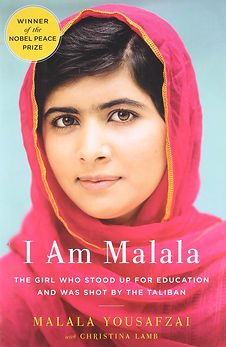
I Am Malala: The Story of the Girl Who Stood Up for Education and was Shot by the Taliban
by Malala Yousafzai, Christina Lamb
MOVIES

Hava, Maryam, Ayesha (2019)
Osama (2003)

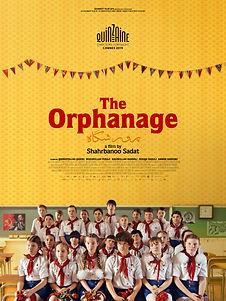
The Orphanage
(2019)
Wolf and Sheep
(2016)

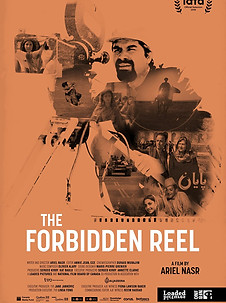
The Forbidden Reel (2019)
Faceless
(2017)


The Breadwinner (2017)
SHORT FILMS

An Afghan village girl goes on her first date in London
Our Kind of Love
A young Afghan girl embarks on a dangerous journey to Pakistan
Road to Peshawar

REAL LIFE STORIES
FEAR LIVES WITHIN -
“I’m a hazara born in Afghanistan but now residing in Australia. Most of my family is in Afghanistan right now. My grandpa raised me when my dad was away. He was my father figure for much of my life. It’s been more than 12 years since I last saw him. I heard he has grown old and frail. I miss him dearly. One of my cousins, she worked as a civil servant for the government. She was talking about how she used to wake up in the morning, water her flowers and gardens, feed her birds and then go to her office for work. Well, she is now confined to the walls of her house in Kabul and has lost her dreams and aspirations in a matter of days.
I have almost all of my extended family in Afghanistan. Yesterday, they said goodbye to all their hopes, dreams and career aspirations. They said goodbye to human rights and especially the rights of women. They said goodbye to women’s education. They said goodbye to females being able to study and work. They said goodbye to their privacy and integrity. They said goodbye to their identity. They said goodbye to their freedom of speech. They said goodbye to their freedom of movement. They hope that no doors will be knocked. They hope that no girls and young boys will be raped. They hope that no boys will be shot for shaving their beard. They hope that no one will be shot for their connection to the government.”
A real-life account of a person with family residing in the terror-stricken country of Afghanistan.
Source – Reddit

POETRY
Will I Ever Feel Again?
I wonder what they shout about
Their mouths are wide open yet I hear no thing
The suffrage is clearly visible
Yet the resolution is in oblivion
Tongues are now being tied or cut off
‘Cause we speak too much, they say
But why can’t I hear anything?
With every clicking trigger
A shell falls down and the bullet pierces someone apart
I feel nostalgia alone
But where are my other feelings?
My mind is scarce of not happiness but sorrow
I have heard so many cries
That my ears have become soundproof.
The death zone is kilometres away now
I am with my leftover family
On the way to a better place
I should feel relieved and grateful
But the explosives have emptied my senses
And collapsed my heart
I wonder if it will ever be okay.
I want to love my family now
I have come back, finally
I have left the barren land
Then why am I reluctant?
My wife looks beautiful today
And the kids are so grown up
I wish I could stretch out a hand and give them a kiss.
The war stands over
With the trophy in wrong hands
I have escaped but my country is still behind
The freedom is overwhelming
Bulging to the negative
And with a numb heart
I wish I was more alive.
---Vasudha Sharma
Afghanistan
I have been to their city
I have read letters signed with pity,
I have seen my villages burn
I have seen gods turn,
I have seen my nation’s pain
From 95' fields with no rain
To unwelcome visitors in big planes.
Blood on their hands
Vulture eyes on our lands,
Spilling our blood under the sun
As they preach peace with a gun,
Whole world in a silent vow
As they break our knees to make us bow
The faux savior too is mute now.
---Navreen Kaur
Contributors
IDEATION, RESEARCH AND WRITING
NANDINI RAMJIWAL
NAVREEN KAUR
PALAQ DIXIT
SHREYAS SHANKER
TUSHAR GUPTA
VIDUSHI
VASUDHA SHARMA
YASHOVARDHAN TIWARY
TECHNICAL
DHRUV VERMA
YASHOVARDHAN TIWARY